
How Bench Warrants Work in Culpeper County
“Bench warrant” is common shorthand. Virginia papers may instead say warrant, capias, capias attachment of the body, or show cause. Read the exact title, because it shapes what happens next. The court holding the underlying case controls any later appearance or motion. In Culpeper County, the path can start with a skipped arraignment, trial, or motion, or a missed release condition. Willful failure may bring a new charge or bond forfeiture, though the circumstances and statute drive that result. So call the Culpeper County clerk. Never assume the absence automatically produced an arrest warrant.
Missed Dates and Culpeper Bench Warrants
Illness, transit trouble, or childcare can keep someone from court. Call your lawyer and the clerk fast. Culpeper County’s Circuit appearance order asks a person facing an emergency to report it and supply supporting information when requested. J&DR warns plainly that late or missed attendance can lead to a show cause or warrant. Virginia Code § 19.2-128 directs courts to weigh willfulness and mitigating facts. Those include unforeseen illness, transportation problems, dependent care, and any effort to communicate or remedy the absence. Such facts do not erase a court order. Still, a Culpeper County judge may weigh them. Keep letters, notices, and proof of contact.
Bench Warrant Issuance in Culpeper County
Which court issues the paper depends on the case. GDC covers adult traffic and misdemeanor files. Circuit Court keeps felony trials and circuit criminal matters. J&DR holds juvenile and family cases. Magistrates can issue criminal process and conduct bail proceedings, but they are not a trial court. The clerk can tell you which file and docket apply in Culpeper County. Circuit criminal motion day runs the second and fourth Tuesday at 9 a.m., and filing directions describe a 24-hour motion deadline. That deadline is not a promise of recall. A judge decides that. The Circuit Court’s official page gives the clerk, calendar, and current filing route for Culpeper County.
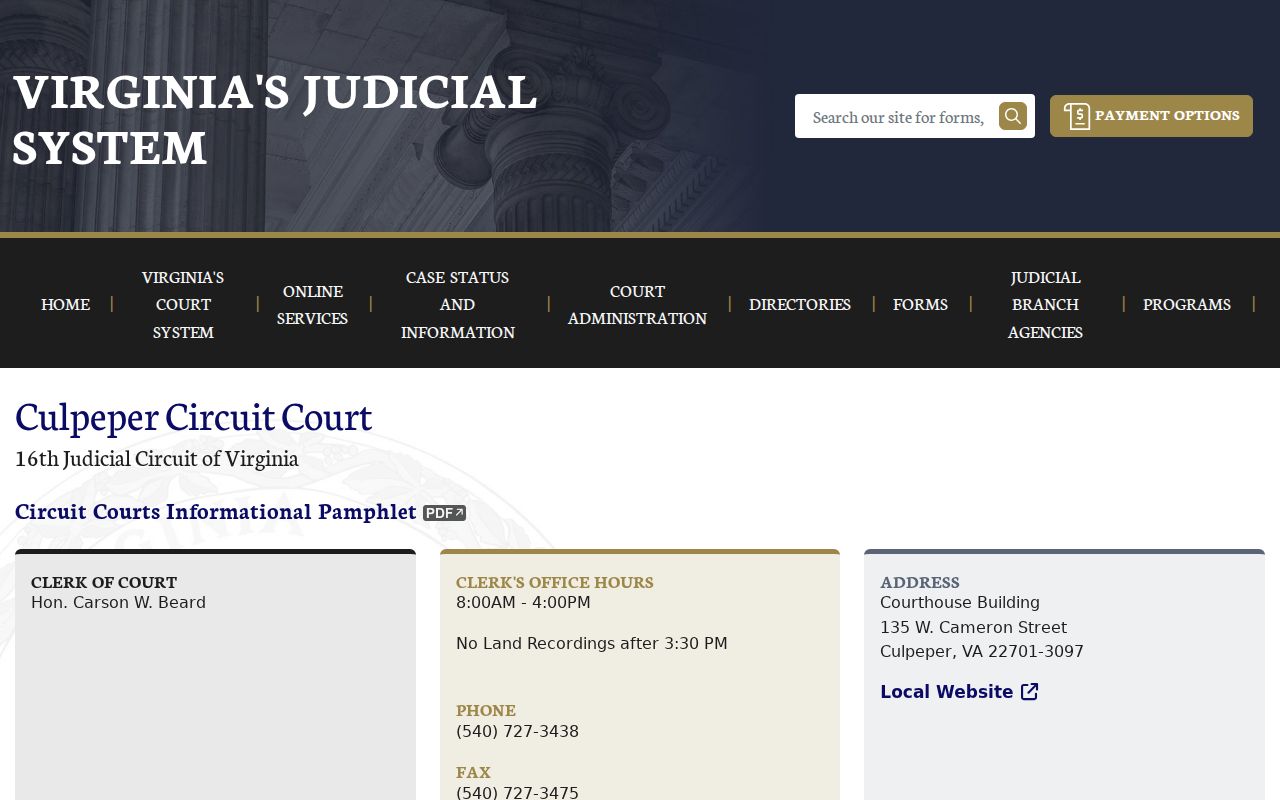
The Circuit clerk can identify the case process, but a judge decides a motion.
Culpeper Bench Warrant Court Routes
Which court you call depends on the case. A town traffic or ordinance matter can still be a GDC case, since Culpeper County’s current official pages place Town and local criminal sessions on that court’s calendar. A juvenile or support matter belongs with J&DR, where online detail is limited. The courthouse is shared. The clerk and docket are not. General District Court in Culpeper County lists arraignments and Town/Local traffic sessions separately from State Police traffic sessions, which helps identify the right clerk when a summons is missing. Confirm date and status first. The GDC page shows the local court route and schedule.
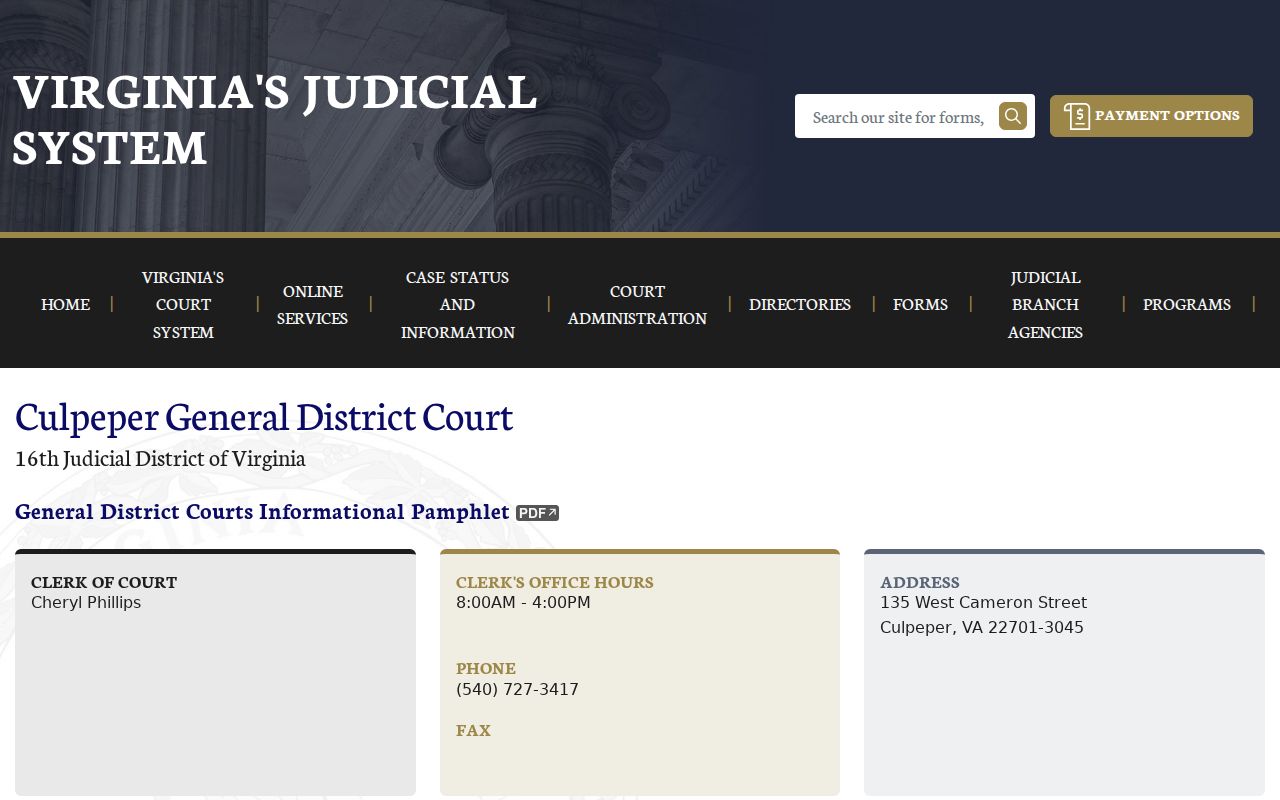
Ask the Culpeper County clerk whether the paper is a warrant, capias, show cause, or just a new date.
How Bench and Arrest Warrants Differ
An arrest warrant rests on sworn facts and a probable-cause finding about an alleged offense, while a bench warrant follows a missed obligation or noncompliance in a Culpeper County case already open. The triggers differ. Both may still direct an arrest. A summons is notice to appear without the same immediate command.
| Process | Typical trigger | First local contact |
|---|---|---|
| Arrest warrant | Complaint and probable cause | Magistrate or court holding the case |
| Bench/FTA process | Missed appearance or noncompliance | Court that set the date or order |
| Summons | Notice to appear | Court named on the paper |
Virginia Capias in a Culpeper Case
Capias is a Virginia process term, not a synonym for every warrant. Read the form in a Culpeper County case. State form DC-331, “Surety’s Capias and Bailpiece Release,” covers a surety’s request after nonappearance. Another court form is titled “Capias, Attachment of the Body.” Ask the clerk what the document says and whether a surety, judge, magistrate, or sheriff must act.
- Capias
- Process that can direct a person’s return or arrest before court.
- Show cause
- A court order to explain why a person did not comply.
- Recall or quash
- A court action that withdraws or cancels process.
- Bond forfeiture
- A court process affecting security after a qualifying failure to appear.
Clearing a Bench Warrant in Culpeper County
Start with the issuing clerk. Ask whether the Culpeper County court shows an active capias, warrant, or show-cause order. Then ask what the judge requires. That could be a motion, a new date, a personal appearance, a bond hearing, or a lawyer’s filing. A clerk explains procedure but promises nothing. The county publishes no walk-in surrender hours or bond-window rules.
- Gather the case number, summons, release paper, and missed-date reason.
- Call the right court and ask about status and the next lawful step.
- Contact counsel if a felony, arrest risk, or court motion is involved.
- Keep the signed order, receipt, or new hearing notice after court action.
Do not assume a voicemail, payment, or trip to the sheriff’s office recalls a judge’s order.
Culpeper County Warrant Rules for Infractions
Virginia splits traffic infractions from traffic misdemeanoms. Under § 19.2-258.1, an eligible infraction may be tried in the person’s absence. Under § 46.2-938, no warrant should follow that failure. The traffic infraction rule and the case order still control. A traffic misdemeanor or other summons follows a different path, which can include show cause or capias process in Culpeper County. Ask GDC how the charge is classified before paying or treating the matter as closed. A prepayable infraction may allow a first continuance from the clerk. Misdemeanor and felony continuances go to a judge.
Culpeper County Courts That Issue Bench Warrants
Culpeper County splits its bench warrant work by court. Adult traffic and misdemeanor process belongs to GDC, reachable at (540) 727-3417. Felony trials, indictments, and circuit criminal files go through the Circuit Clerk at (540) 727-3438. Juvenile, support, custody, protective-order, and family matters sit with J&DR, whose number is (540) 727-3418. District 16 magistrate services, at (540) 727-3433, handle issuance and bail direction. Expect tight limits on any J&DR public search, since juvenile records stay protected; the court’s own page posts the clerk contact and case schedules you need.
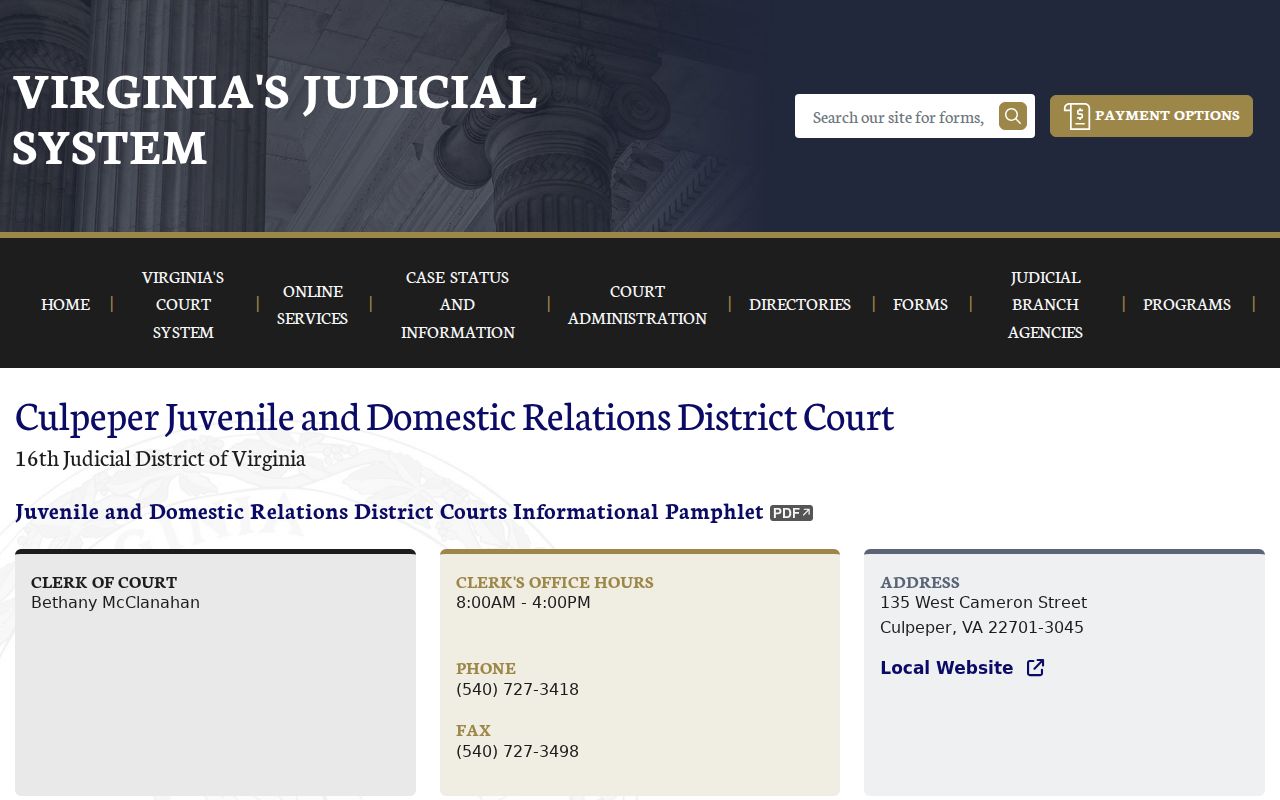
Use a private call to ask which process applies; do not post juvenile details.
Keep the Culpeper Court Order
Hang onto every signed order and receipt from a hearing, motion, payment, bond, or recall. Ask the clerk if a date or duty still stands. Custody process can end while the charge itself moves on. In a juvenile or family case, call first before emailing any paper. The local court contact page and procedures page post different public hours, so confirm counter times and any language or sign-language help before you go. Its appearance guidance also warns that security and parking can slow your arrival. The local J&DR site lays out the courthouse access steps, and the Culpeper County warrant overview maps how the clerk, magistrate, and sheriff each fit the broader warrant path.
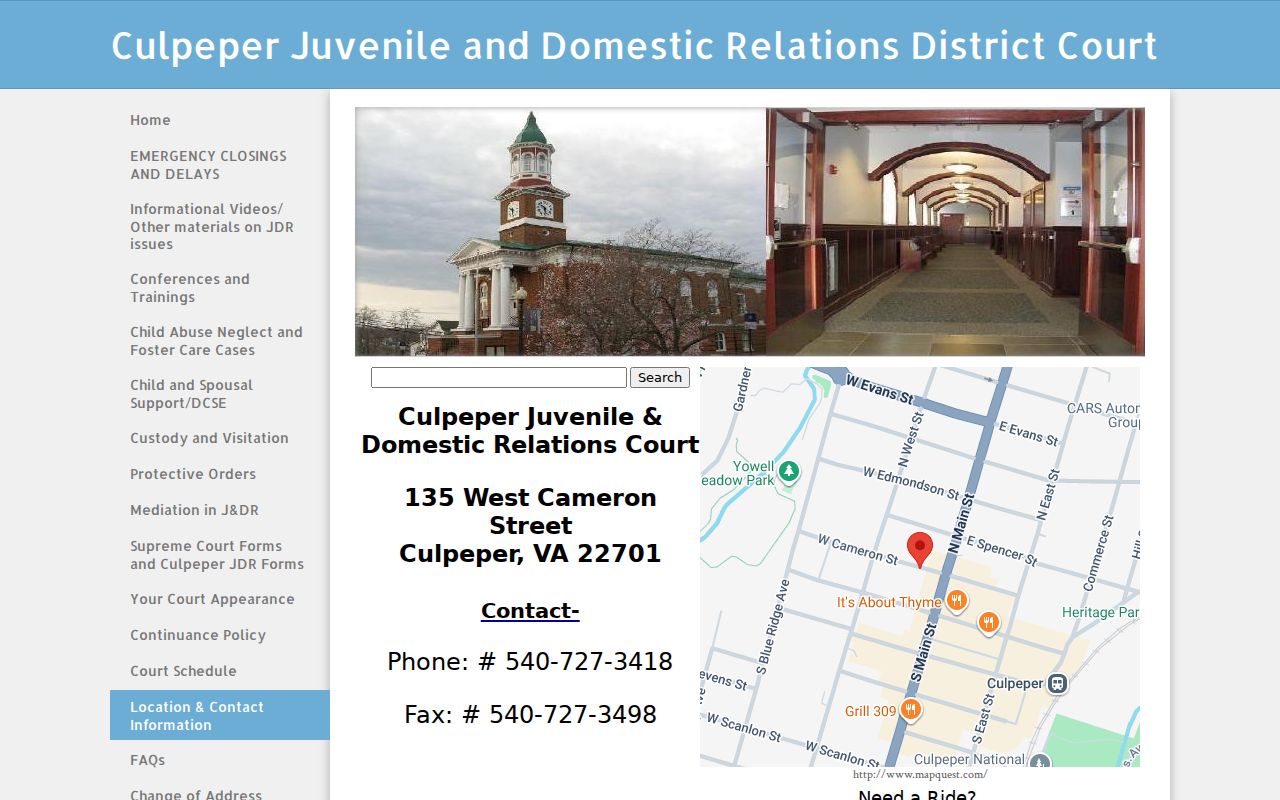
Security and parking can affect your arrival time, so build in a cushion. For the wider picture, the Culpeper County warrant overview maps the clerk, magistrate, and sheriff roles.